
Advantages
BIO | One Stage Advantages
|
|
Bio | One StageStraumann Compatible
|
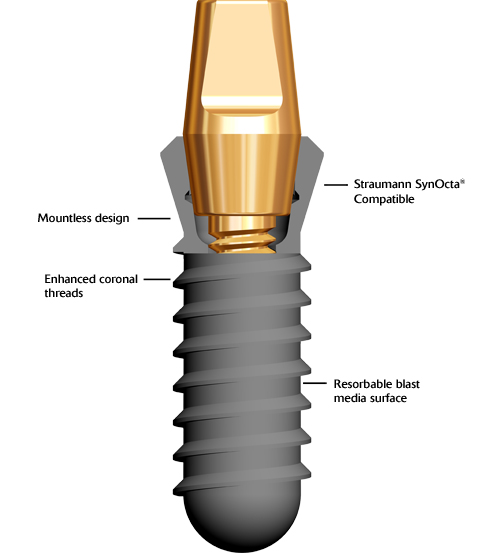
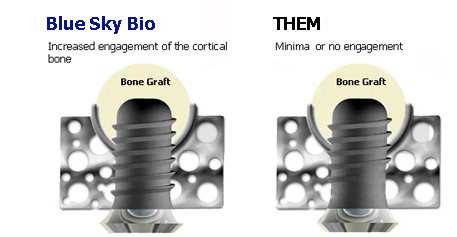
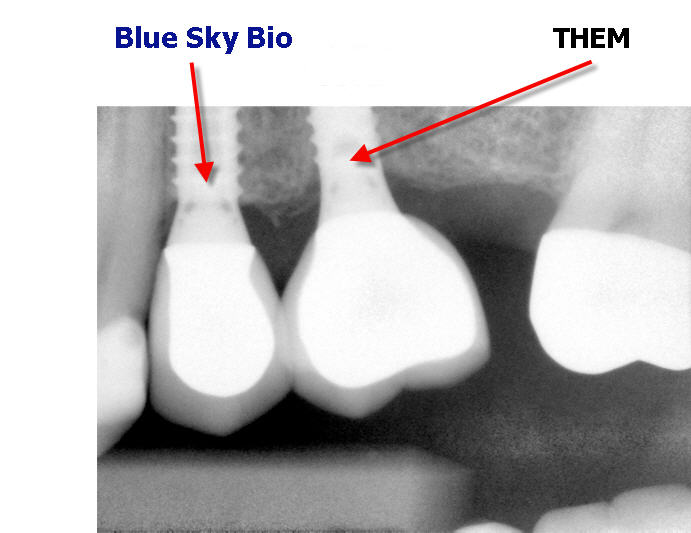
Mountless Design
Blue Sky Bio developed a patented thread design that allows easy insertion of the J-implant driver with friction fit into the implant and can be simply pulled out once the implant is in place. The Blue Sky Bio implant can be easily backed out with the J-implant driver, if necessary. Mounts from other companies engaging internal taper implants slip if the implant needs to be backed out.
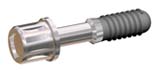
Blue Sky Bio eliminated cumbersome implant mounts, and thus eliminated the need to use a counter wrench with the second hand to remove the mount. This is especially important for posterior areas.
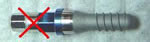
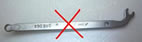
Note that ITI®-Straumann COC® abutments, synOcta® abutments and Lifecore® Stage-1™ abutments are compatible with Blue Sky Bio implants, but implant mounts from these companies should not be used.
Surface
The surface of Blue Sky Bio implants have a roughness that proved to be excellent for osseointegration. Our implants are blasted with a resorbable HA and then washed with an acid, removing all residue from the blasting material. The surface of our implants is treated by one of the most experienced companies in the world. Recognizing the superior features, many other implant companies are moving towards this surface because it has a very predictable roughness and does not require heating the parts at very high temperature (such as plasma spraying or HA coating).
References on Blue Sky Bio Dental Implant Surfaces
A prospective, multicenter, 4-year study of the ACE Surgical resorbable blast media implant.
J Oral Implantol 2003; 29(4):174-80 (ISSN: 0160-6972)
Gonshor A; Goveia G; Sotirakis E
McGill University, Oral and Maxillofacial Surgery, Montreal, Quebec, Canada.
arongonshor@hotmail.com
This article reports on the 50-month results of the evaluation of the ACE Surgical resorbable blast media (RBM) dental implant. There were 1077 implants placed in 348 patients: 950 in the mandible and 127 in the maxilla. A total of 78.6% of the implants were used to support anterior, mandibular, bar-retained overdentures. The 3.75- to 4.00-mm-diameter implant was used in 91.1% of cases, with the remainder being 3.3 mm (2.2%) or 4.75 mm (6.7%). The implants of 10-, 13-, and 15-mm lengths were used in almost equal amounts in the mandible, maxilla, and anterior or posterior aspects of either jaw. There were 7 failures, all in the mandible and before stage 2 surgery. The overall implant success rate in this 50-month interim report is 99.3% in the mandible and 100% for the maxilla. There was no discernible crestal bone loss during the study period. No differences in bone response were seen in RBM implants with roughened surfaces on the entire implant, up to the collar, or up to the first 2 threads below the collar.
Bone response to machined and resorbable blast material titanium implants: an experimental study in rabbits.
J Oral Implantol 2002; 28(1):2-8 (ISSN: 0160-6972)
Piattelli M; Scarano A; Paolantonio M; Iezzi G; Petrone G; Piattelli A
Dental School, University of Chieti, Chieti, Italy.
The aim of the present study was a comparison of implants' responses to a machined surface and to a surface sandblasted with hydroxyapatite (HA) particles (resorbable blast material [RBM]). Threaded machined and RBM, grade 3, commercially pure, titanium, screw-shaped inplants were used in this study. Twenty-four New Zealand white mature male rabbits were used. The inplants were inserted into the articular femoral knee joint according to a previously described technique. Each rabbit received 2 inplants, 1 test (RBM) and 1 control (machined). A total of 48 implants (24 control and 24 test) were inserted. The rabbits were anesthetized with intramuscular injections of fluanisone (0.7 mg/ kg body weight) and diazepam (1.5 mg/kg b.wt.), and local anesthesia was given using 1 mL of 2% lidocaine/adrenalin solution. Two rabbits died in the postoperative course. Four animals were euthanatized with an overdose of intravenous pentobarbital after 1, 2, 3, and 4 weeks; 6 rabbits were euthanatized after 8 weeks. A total of 44 implants were retrieved. The specimens were processed with the Precise 1 Automated System to obtain thin ground sections. A total of 3 slides were obtained for each implant. The slides were stained with acid and basic fuchsin and toluidine blue. The slides were observed in normal transmitted light under a Leitz Laborlux microscope, and histomorphometric analysis was performed. With the machined implants, it was possible to observe the presence of bone trabeculae near the implant surface at low magnification. At higher magnification many actively secreting alkaline phosphatasepositive (ALP+) osteoblasts were observed. In many areas, a not yet mineralized matrix was present. After 4 to 8 weeks, mature bone appeared in direct contact with the implant surface, but in many areas a not yet mineralized osteoid matrix was interposed between the mineralized bone and implant surface. In the RBM implants, many ALP+ osteoblasts were present and in direct contact with the implant surface. In other areas of the implant perimeter it was possible to observe the formation of an osteoid matrix directly on the implant surface. Mature bone with few marrow spaces was present after 4 to 8 weeks. Beginning in the third week, a statistically significant difference (P < .001) was found in the bone-implant contact percentages in machined and RBM implants. It must be stressed that these results have been obtained in a passive, nonloaded situation.
Experimental study of bone response to a new surface treatment of endosseous titanium implants.
Implant Dent 2001; 10(2):126-31 (ISSN: 1056-6163)
Sanz A; Oyarzun A; Farias D; Diaz I
Odontology Faculty, University of Chile, Santiago, Chile.
asanz@entelchile.net
This study examines a new surface treatment that uses coarse calcium phosphate, which provides the benefits of surface roughening without introducing any foreign materials that may become imbedded in the implants. It is intended to enhance the use of implants in areas of inferior bone quality and quantity, such as the posterior areas of the maxilla and the mandible. Implants placed in the tibia of rabbits were removed after 16 weeks and examined microscopically. Pore sizes examined under the scanning electron microscope met the conditions described in the literature for successful integration. Optic microscopy revealed evidence of bone apposition over the roughened implant surface comparable to that seen in other surfaces. There was a definite absence of fibrous tissue, demonstrating good-to-excellent bone contact with the Restore Resorbable Blast Media implants (Lifecore Biomedical, Chaska, MN). In addition, it appears that the blasting of resorbable calcium phosphate on the machine titanium surface results in the resorbable blast media surface acting like an inert material. Further studies with a larger sample size are needed to confirm these initial findings.
Histomorphometric analysis of the bone-implant contact obtained with 4 different implant surface treatments placed side by side in the dog mandible.
Int J Oral Maxillofac Implants 2002 May-Jun; 17(3):377-83 (ISSN: 0882-2786)
Novaes AB; Souza SL; de Oliveira PT; Souza AM
School of Dentistry of Ribeirao Preto, University of Sao Paulo, Brazil.
novaesjr@forp.usp.br
PURPOSE: The different implant systems available today present several types of surface treatment, with the aim of optimization of bone-implant contact. This study compared 4 different types of implant surfaces. MATERIALS AND METHODS: The first, second, third, and fourth mandibular premolars were extracted from 5 young adult mongrel male dogs. Ninety days after removal, four 3.75-mm-diameter, 10-mm-long screw-type implants (Paragon) were placed with different surface treatments in mandibular hemiarches. The dogs received 2 implants of each of the following surface treatments: smooth (machined), titanium plasma spray (TPS), hydroxyapatite coating (HA), and sandblasting with soluble particles (SBM). The implants were maintained unloaded for 90 days. After this period, the animals were sacrificed, and the hemimandibles were extracted and histologically processed to obtain non-decalcified sections. Two longitudinal ground sections were made for each implant and analyzed under light microscopy coupled to a computerized system for histomorphometry. RESULTS: The following means were obtained for bone-implant contact percentage: machined = 41.7%, TPS = 48.9%, HA = 57.9%, and SBM = 68.5%. DISCUSSION: The means for all treatments that added roughness to the implant surface were numerically superior to the mean found for the machined surface. However, this difference was statistically significant only between groups SBM and machined (Tukey test, P < .05). CONCLUSIONS: The SBM-treated surface provided a greater bone-implant contact than a machined surface after 90 days without loading in this model.
Evaluation of the interface between bone and titanium surfaces being blasted by aluminium oxide or bioceramic particles.
Clin Oral Implants Res 2003 Jun; 14(3):349-56 (ISSN: 0905-7161)
Mueller WD; Gross U; Fritz T; Voigt C; Fischer P; Berger G; Rogaschewski S; Lange KP
Dental School, Medical Faculty Charite, Humboldt-University of Berlin, Berlin, Germany.
wolf-dieter.mueller@charite.de
The surface structure, in particular the surface roughness, and the surface chemistry of titanium implants influence their anchoring in bone. The aim of this study was to analyse metal-bone contact (MBC) after modification of the implant surface, using different materials for blasting. The surface modification of titanium was produced by blasting it with particles made of Al2O3 or bioceramics. The biological effects were then investigated experimentally using 27 rabbits, analysed after 7, 28 and 84 days after the implantation of titanium cylinders treated accordingly. The MBC showed a tendency for more bone after bioceramics were used as a blasting material, compared to Al2O3.
Comparison Chart
| Features | Blue Sky Bio | Straumann-ITI® |
| Internal 8° Taper | Yes | Yes |
| Compatible with other companies' instrumentation and parts | Yes | Yes |
| Easy mountless insertion | Yes | No |
| Easy backing up of implant | Yes | No |
| Indexibility of abutment | Yes (SynOcta® compatible) | Yes (SynOcta®) |
| Surface roughness for enhanced osseointegration | Yes (blasted with medium and acid washed) | Yes (blasted with non-resorbable medium and acid etched) |
| Orthopedic Grade 23 – Titanium 6AL-4V ELI (especially important for thin implants) | Yes | No (weaker grade 4 titanium) |
| Available narrow neck implant with internal taper | Yes | No (external oct) |
| Availabe narrow neck implant compatible with regular abutments | Yes | No (external oct) |
| Narrow implant allows coverage of implant neck with prosthetics | Yes | No (undercut) |
| Universal preparable abutment | Yes (2 sizes) | No |
| Abutment/Analog design for impression without need for pick-up components | Yes (abutments and analogs have added matching dimples) | No (2 piece system) |
| Abutments can be inserted in narrow areas with .048 hex driver | Yes | No |
| Abutments can be inserted with other companies' drivers and torque wrenches | Yes | Yes (except .048 hex) |
| Price | $ | $$$ |
Compatibility
Proven internal 8° Morse taper with oct feature compatible with Straumann-ITI® and Lifecore® Stage-1® implants, solid abutments and instrumentation.
8° Morse Taper
Blue Sky Bio components have an 8° Morse taper that is compatible with Straumann-ITI® and Lifecore® Stage-1® implants, solid abutments, impression components and most instrumentation.
Internal Oct
Blue Sky Bio implants have an internal oct indexing feature, which is compatible with the Straumann® synOcta® system.
Insertion Ratchet
Blue Sky Bio implants and abutments can be inserted with a standard square drive ratchet (Lifecore) or with the Straumann-ITI® ratchet.
Free Conversion Kit
Blue Sky Bio implants are mount-free. Our free conversion kit allows Straumann-ITI® and Lifecore® Stage-1® users to utilize existing instrumentation. A $219 value. Requires initial purchase of at least four implants. This offer is limited to one free kit per practice or practitioner.
Narrow Platform
Narrow implants have the same body geometry as regular implants. The platform is reduced to 4.1mm diameter and the undercut below it has been eliminated.
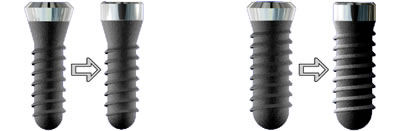
- Will work in 30% more cases where space is limited.
- Is easier to place when space is available, but is a tight fit.
- Available in 3.3 and 4.1 body diameters.
- Uses the same prosthetics as the regular platform.
- No new surgical technique.
- No new restorative technique.
- Much more forgiving in anterior areas.
- Flat collar allows for porcelain to be placed over implant collar in case of recession.